A New Flour Delivers Delicious Healthy Flavor to Waffles

A few weeks ago, I was working on a recipe for waffles made with whole wheat and white flours when one of my talented assistants asked, “Why don’t you use King Arthur’s White Whole Wheat Flour?”  She took me totally off guard. I was not aware of this product and looked it up on line. It turns out that this flour has all the nutritional benefits of whole-wheat flour, but is surprisingly light in both color and taste. 
Continue reading

Irish Coffee, Of Course

If you’re planning to celebrate St Patrick’s Day, what could be better than to toast your friends with a cup of steaming coffee scented with Irish whiskey and topped with a floating cloud of whipped cream?
 
Irish coffee has an interesting history that starts in Ireland and finishes on the west coast of the U.S.  As the story goes, this special java drink was created in the Shannon airport in the mid-twentieth century where it was a restorative offering served to weary passengers. The recipe was brought to the States by a San Franciscan who shared it with his hometown’s Buena Vista Bar. The hot, strong coffee infused with Irish whiskey became the signature drink of that California bar, and eventually its popularity spread throughout the U.S. and around the globe. The following version is my favorite.
 
1/4 cup good quality Irish whiskey (Jameson’s works well.)
8 teaspoons sugar
1 1/3 cups or more brewed hot coffee, preferably strong, dark French roast
1/2 cup heavy or whipping cream, whipped softly
 
Place 1 tablespoon of whiskey and 2 teaspoons of sugar in each of four 8-ounce glasses or cups. Stir with a spoon until sugar dissolves. Pour enough hot coffee into each glass or cup to fill it about 3/4 full.
 
Hold a tablespoon (with the back of the spoon facing you) over the coffee in one cup, and ladle 2 to 3 tablespoons of the whipped cream over the spoon so that it gently falls into the coffee. Adding the cream this way will help it float on top of coffee instead of sinking immediately to the bottom. Repeat with the 3 other servings. Serve immediately.
 
Serves  4

Fast, Delicious, Healthy – A Great Weeknight Meal

A few weeks ago, my son, who does all the cooking in his family, emailed me a recipe that he claimed had become his salvation on hectic weeknights. He explained that it was an all-in-one main course that featured cod fillets on a bed of spinach, tomatoes, garlic, and olives, all conveniently layered on a large baking sheet. The dish took only about 15 minutes to assemble, then 25 minutes in the oven. When roasted, the fish, scented with an accent of lemon, was moist, and the mélange of vegetables melded into a tempting softness.
But here’s the best part: a quick trip to the supermarket is all that is needed to put this entrée together. Waltz through the produce aisle; put bags of pre-washed spinach and some tomatoes in your cart; walk by the salad bar and pick up pitted Kalamatas and roasted garlic; and finally make a quick stop at the fish department. Continue reading

Let The Good Times Roll

I am all set for Mardi Gras, which falls this year on Tuesday, March 8th.  For the past few weeks I’ve been testing dishes for a new cookbook, Sunday Brunch. One of my favorite recipes from the collection has turned out to be shrimp and grits. From the first bite, I knew that these extra creamy grits, seasoned with two cheeses and topped with a spicy tomato, shrimp, and andouille sausage mélange, were redolent of New Orleans. 
An all-in one casserole, these grits would be perfect to serve for a weekend brunch celebration. Add a mixed greens salad tossed in a red wine vinaigrette, either warm crusty baguettes or cornbread, and, of course, a little bubbly for toasting. For a light finish combine orange segments, fresh pineapple slices, and blueberries garnished with mint. If you want to be truly authentic with your caffeine offering, check at the super market for French Market Coffee and Chicory (www.frenchmarketcoffee.com). This terrific dark brew has a hint of chicory just like the cups of java in the French Quarter.
Mardi Gras colors are purple, yellow, and green, if you’re searching for inspiration for the table. And, for music, consider playing some Wynton Marsalis, the Neville Brothers, or classic Louis Armstrong. “Laissez les bon temps rouler.”
Spicy Shrimp and Grits
Grits
1 cup old fashioned (not instant or quick) grits
3/ 4 teaspoon salt, plus more if needed
3/4 cup grated sharp white cheddar cheese, divided
1/2 cup grated Parmesan cheese, preferably Parmigiano Reggiano
1/2 teaspoon freshly ground black pepper
1/8 teaspoon cayenne pepper
Spicy Shrimp
1 tablespoon olive oil
6 ounces andouille sausage, cut into 1/2-inch dice
1/3 cup chopped green onion (including 2 inches of green stems)
2 teaspoons minced garlic
1/8 teaspoon cayenne pepper, plus more if needed
One 14-ounce can diced tomatoes, drained well
1 pound medium shrimp (30 count), peeled and deveined with tails left on
Kosher salt
Freshly ground black pepper
1 1/2 tablespoons chopped flat leaf parsley
Butter a shallow, 2-quart oven-to-table baking dish.
Bring 4 cups of water to a boil in a large, heavy saucepan (with a lid) set over medium high heat. Pour the grits in slowly. Then add the salt and whisk well.  
When mixture comes to a simmer, reduce the heat to low and cover pan.  Cook the grits at a gentle simmer, stirring every 3 to 4 minutes, so that they do not stick to the bottom of the pan. Cook until the grits have thickened, about 15 minutes or according to package directions.
Remove the grits from the heat and stir in 1/2 cup of the cheddar and all of the Parmesan cheese. Season with black pepper, cayenne pepper, and more salt if needed. Spread the grits in an even layer in the prepared pan and sprinkle the remaining 1/4 cup cheddar over the top. (Grits can be prepared 1 day ahead; cool, cover, and refrigerate. Bring to room temperature before baking.)
To bake the grits, arrange a rack at center position and preheat the oven to 350 degrees F.
Bake grits until they are  hot and the cheese has melted on top, about 25 minutes. If you would like to brown the cheese on top, arrange an oven rack 4 to 5 inches from the broiler and turn on broiler. Broil until the cheese starts to brown lightly, 2 to 3 minutes.
While the grits are in the oven, prepare the shrimp. Heat the oil in a large, heavy skillet set over medium heat. When hot, add sausage and cook, stirring, until lightly browned, about 3 minutes. Add the green onions and garlic and stir 1 minute.  Add the tomatoes and cayenne pepper and stir 2 minutes more. Finally, add the shrimp and cook, stirring, until they turn pink and curl, about 4 minutes. Season the mixture with salt and black pepper. (For a spicier taste, add additional cayenne.) 
To serve, spoon the shrimp mixture down the center on top of the grits. Sprinkle chopped parsley over the shrimp.
Serves 6

Oscar’s Popcorn

Oscar’s Popcorn
Sunday night I plan to be in front of the TV when the 83rd Academy Awards Show gets underway.  From the red-carpet segment to the sign-off several hours later, I’ll be glued to the screen. Broadcast from the Hollywood Kodak Theatre, and co-hosted this year by Anne Hathaway and James Franco, the show will undoubtedly have surprises even though movie critics seem certain that the big winners will be “The King’s Speech” for Best Picture, and Colin Firth and Natalie Portman for Best Actors. 
Food and Oscars have been a long tradition for many of us. One of my former assistants hosts a dinner where guests are encouraged to come dressed as their favorite movie star.  In the past, I’ve planned pre-Oscar suppers where I handed out voting ballots, and even set up a betting pool.
One constant for all Oscar parties is popcorn. Can you imagine watching the awards without a bowl of America’s favorite movie food at your side?  Just to keep things interesting, here are four ways to season those popped kernels. Use as much or as little of the ingredients as you like, tossing the popcorn until you are pleased with the balance of flavors.
1.     Melted unsalted butter, finely grated Parmesan, and sea salt
2.     Melted unsalted butter, sea salt, and coarsely ground black pepper
3.     Olive oil, crushed dried rosemary, and sea salt
4.     Truffle oil (this is a slight extravagance but so good!) and sea salt
If you want a printable ballot, try:
http://www.moviefone.com/oscars-academy-awards/nominee-winner/printable-ballot

A Day in the Life of a Cookbook Author


A few weeks ago the folks at Chronicle Books, the publisher of my Sunday Soup and Sunday Roasts (coming this fall) asked if I would continue the series with Sunday Brunch. The manuscript was due in only a few months’ time, but I agreed knowing that there would be long days spent creating, testing, and fine-tuning recipes for brunches. The calendar of an average day gives you an idea of what’s entailed in writing a cookbook under pressure:

8 AM—Grab quick breakfast of toasted French bread and butter.

8:30 AM—Follow my husband to take his car to repair shop. He knocked off the right side mirror backing out of the garage, and blamed it on the bad weather. This is the 4th time he’s demolished that same mirror; the other three times, it wasn’t snowing.


9:00 AM- Return home. Set up mise en place trays for testing, foolishly optimistic that I would get through four dishes for the new book.

10 AM- Assistants, Mary and Ron, arrive.

10:30 AM Start on Eggs Benedict prepared with wedges of cornbread studded with andouille sausage and a spicy Hollandaise. Made cornbread in 8-inch skillet, but the result was too high and not enough sausage. Redo in 9-inch skillet. Make hollandaise in food processor; spill half of melted butter, and start over. Increase cayenne pepper for spicy accent for the sauce three times until right. Poach eggs. Assemble dish. Unfortunate color combo—hollandaise with cayenne is same hue as yellow cornbread.  Addition of sliced tomatoes corrects monotone situation. Dish looks great, but cornbread still too high. Ron agrees to retest in his kitchen using a 10-inch skillet.

12 PM Tart Cherry and Almond Muffins recipe calls for almond paste, which comes in a tube sealed with metal brackets. Have to find pliers to get the brackets off.  Almond paste and butter fail to combine well in mixer, because I forget to crumble the paste. Finally get mixture smooth and assemble batter. My muffin tins are bigger than what is called for so have to adjust for size difference. Muffins are gorgeous, but stick to nonstick pan and hard to unmold. Decide to spray “nonstick” pans on next try.

1PM- My weekly house cleaners (and fabulous tasters) arrive. They sample and critique muffins as well as Espresso Coffee Cake made another day. Both dishes get a thumbs up.

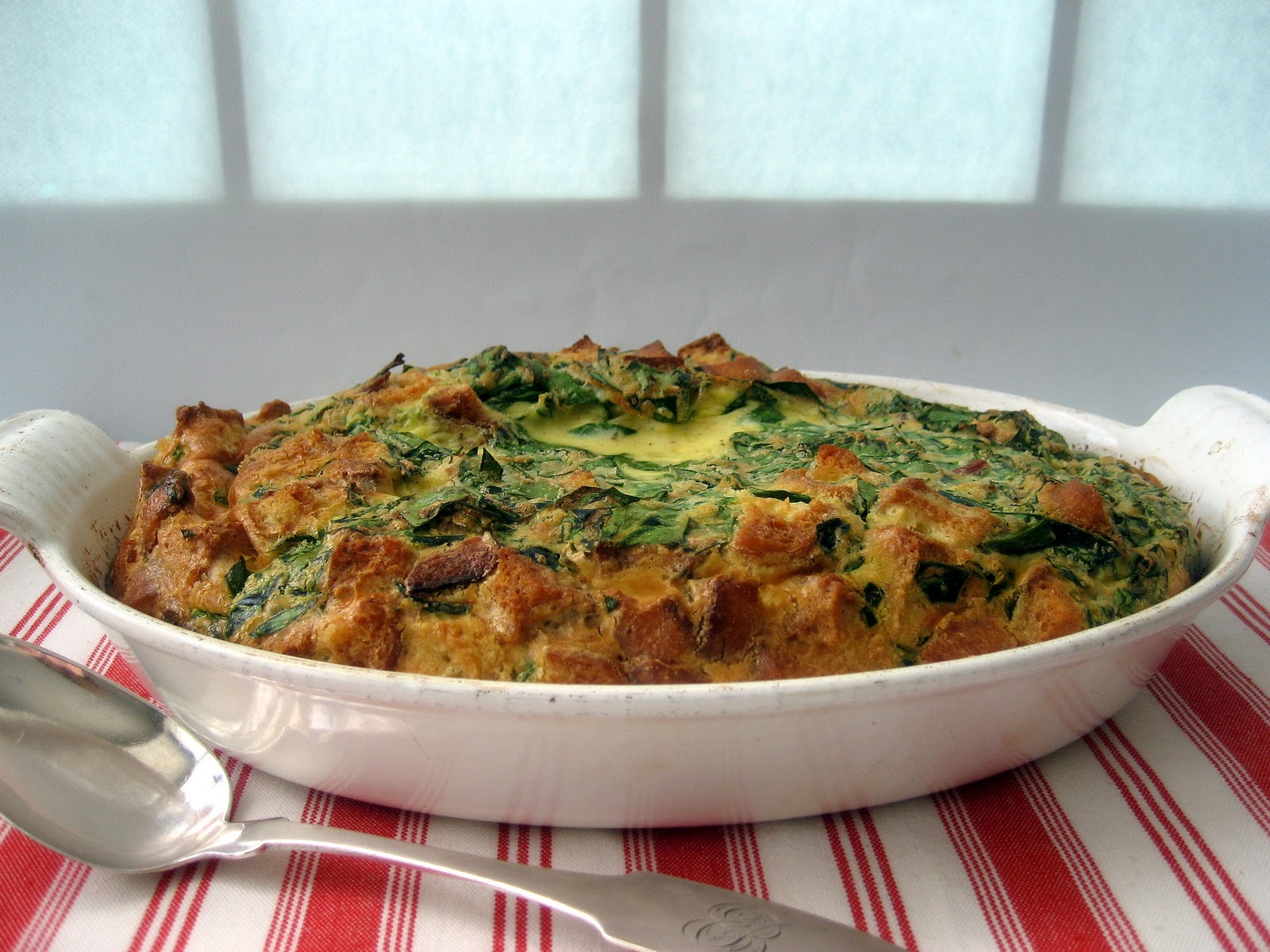
1:30 PM Assemble Souffléed Eggs with Ricotta and Spinach. Recipe calls for sautéed
bacon, but want to try with pancetta.  Make half of dish with bacon and half with Italian counterpart. Dish cooks 10 minutes quicker than my notes indicate. Pancetta wins over bacon.

2:00 PM Move to my office to fine-tune the three recipes tested. Will save fourth recipe, Potato and Onion Galettes, for another day.

3:00 PM Assistants leave with muffins for their partners. I return to office to answer emails with review sheets from volunteers testing recipes for book.

4:00 PM Pick up my husband at his college, return to car garage. Learn that the wrong mirror had been ordered!

5:00 PM Go over testers’ reviews sheets to correct for any problems they had.

7:00 PM My spouse, in the kitchen, grading papers, emails me on the second floor, saying “I’m hungry! When is supper?”

7:05 PM Reheat spaghetti and tomato sauce; make garlic bread. Eat quickly and return to testers’ reviews in office.

8:00 PM Call it a day.  Write out schedule for tomorrow.

* Photo of Souffléed Eggs with Ricotta and Pancetta from forthcoming Sunday Brunch.

Bon Appétit, Julia!

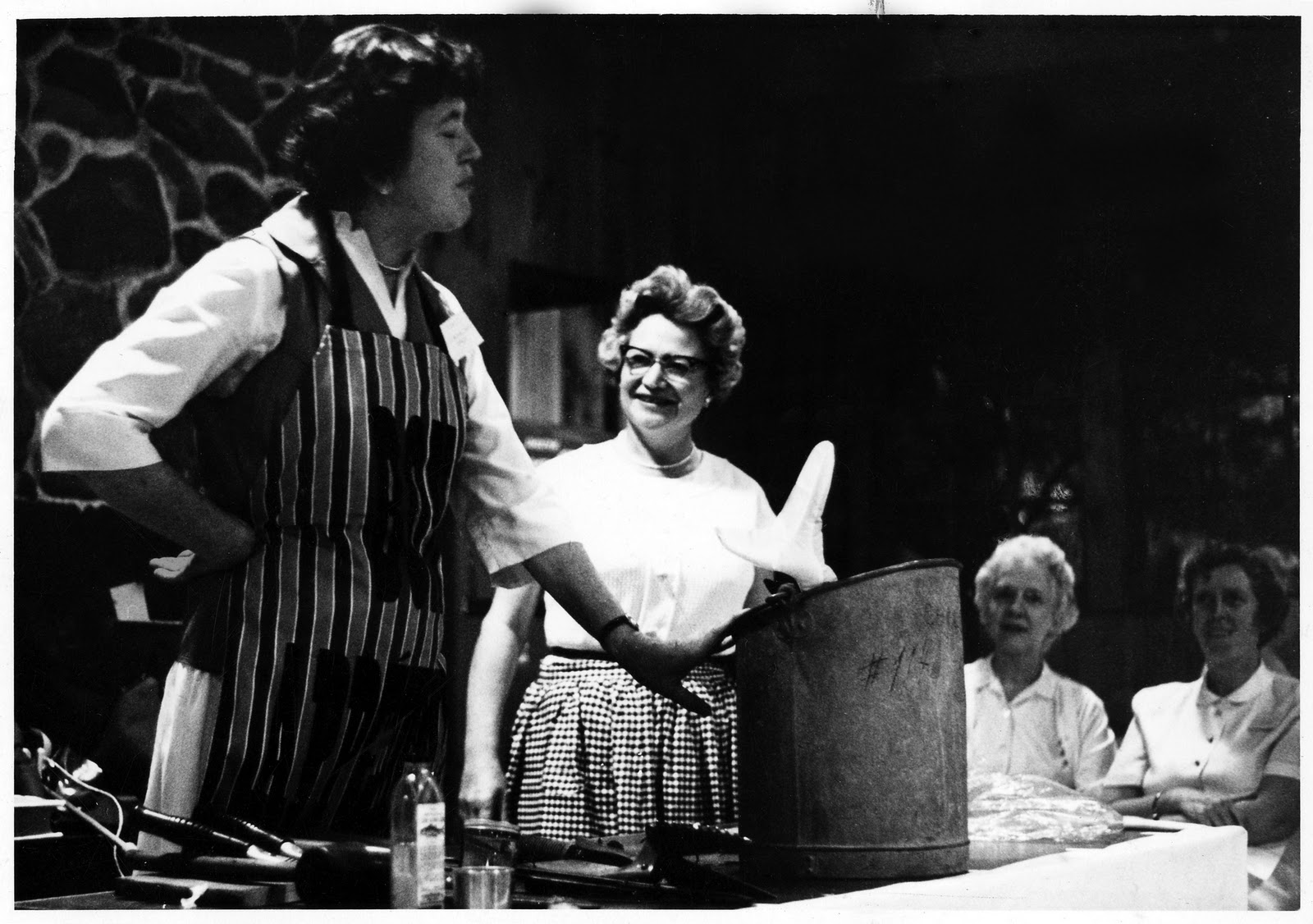
My friend, Connie Wenzel-Jordan, reminded me that this week marks the 48th anniversary of the first episode of The French Chef on WGBH in Boston.
On February 11, 1963, that station broadcast the initial show of the cooking series that turned Julia Child into a popular icon. One of the first such series on television, Child’s was done live and videotaped. Her occasional cooking accidents became classic and her aplomb at handling them her trademark. For the next ten years, the show was produced by WGBH and distributed to PBS stations across the country. 
Julia’s passion for French cuisine and all things culinary changed the way America cooked. She introduced home chefs to shallots, leeks, fresh herbs, croissants, baguettes, unsalted butter, and French cheeses. She also taught them the difference between poaching, braising, and sautéing, and how to chop, dice, and slice.
I certainly owe my career to her. When I was newly married, my husband gave me a copy of her Mastering the Art of French Cooking, desperately hoping that I would take a hint.  I cooked my way through that tome and never missed Julia on tv, hamming it up as she prepared sophisticated French specialties.
Julia’s legacy is indelible. Her Mastering the Art of French Cooking was on the NYT best seller list in 2009, the same year the movie “Julie and Julia,” debuted celebrating her life and that of a young blogger, Julie Powell. 
In a few weeks, I’ll teach a class called “Cooking With Julia.”  The centerpiece of the night’s menu will be boeuf à la bourguignonne, a fork-tender beef and mushroom stew The French Chef made famous. I’d like to say “Bon appétit, Julia!
* The photo of Julia Child cooking with her classmate and fellow cook, Charlotte Turgeon, at their 1964 Smith College 30th reunion was taken by Margaret Sussman (also a member of the class) and is reproduced by permission of the Smith College Archives.

Cooking Up a Storm During the Storm

“Baby It’s Cold Outside!” Those famous song lyrics barely describe what it’s been like in  New England this week. Between temperatures plunging to single digits, and unending snow, we’ve been stuck in the house for long stretches. There’s 3 feet of the white stuff on the ground and more piled atop our roof. Then there are the giant icicles hanging from all the gutters that frame our house.
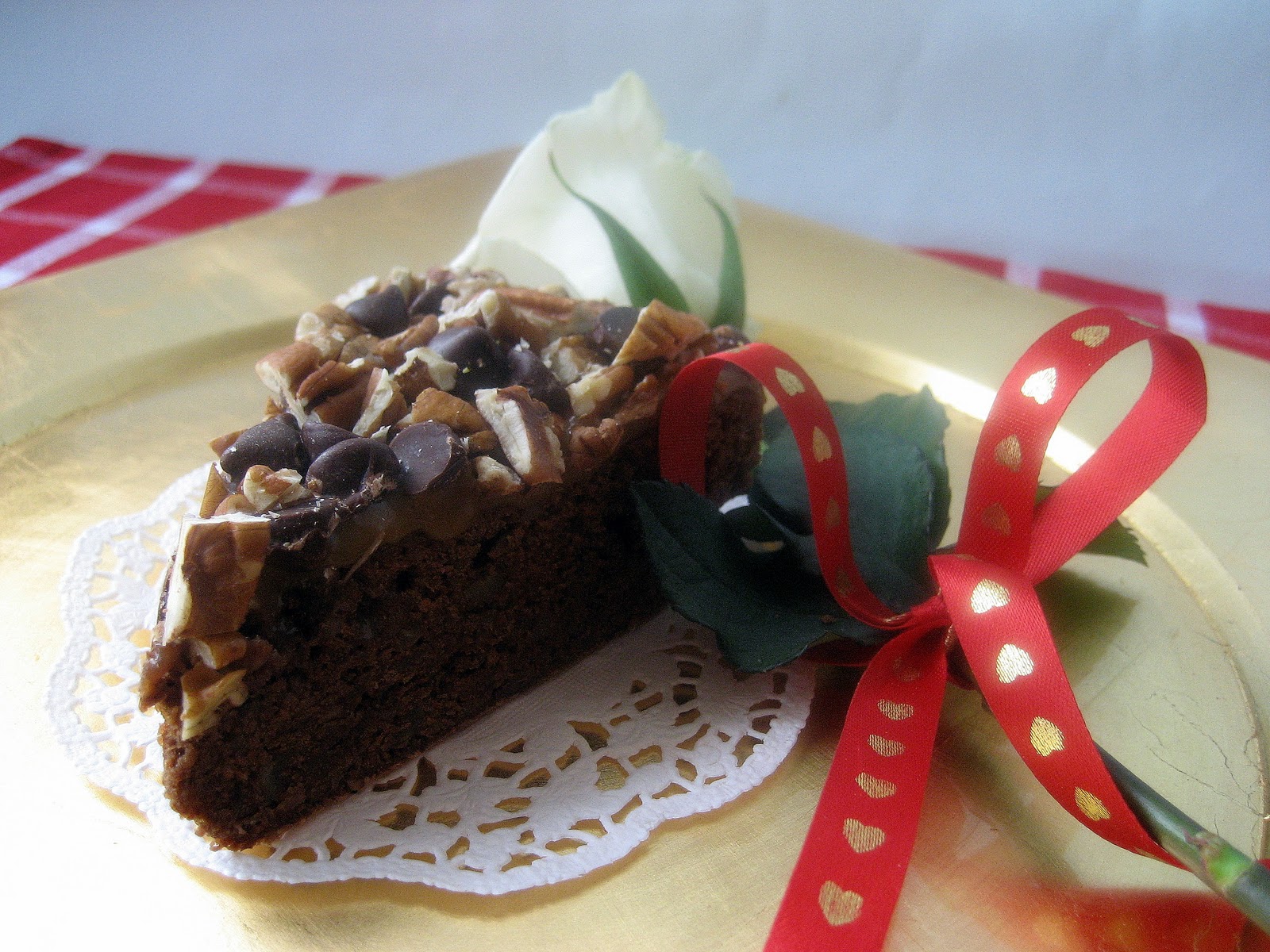
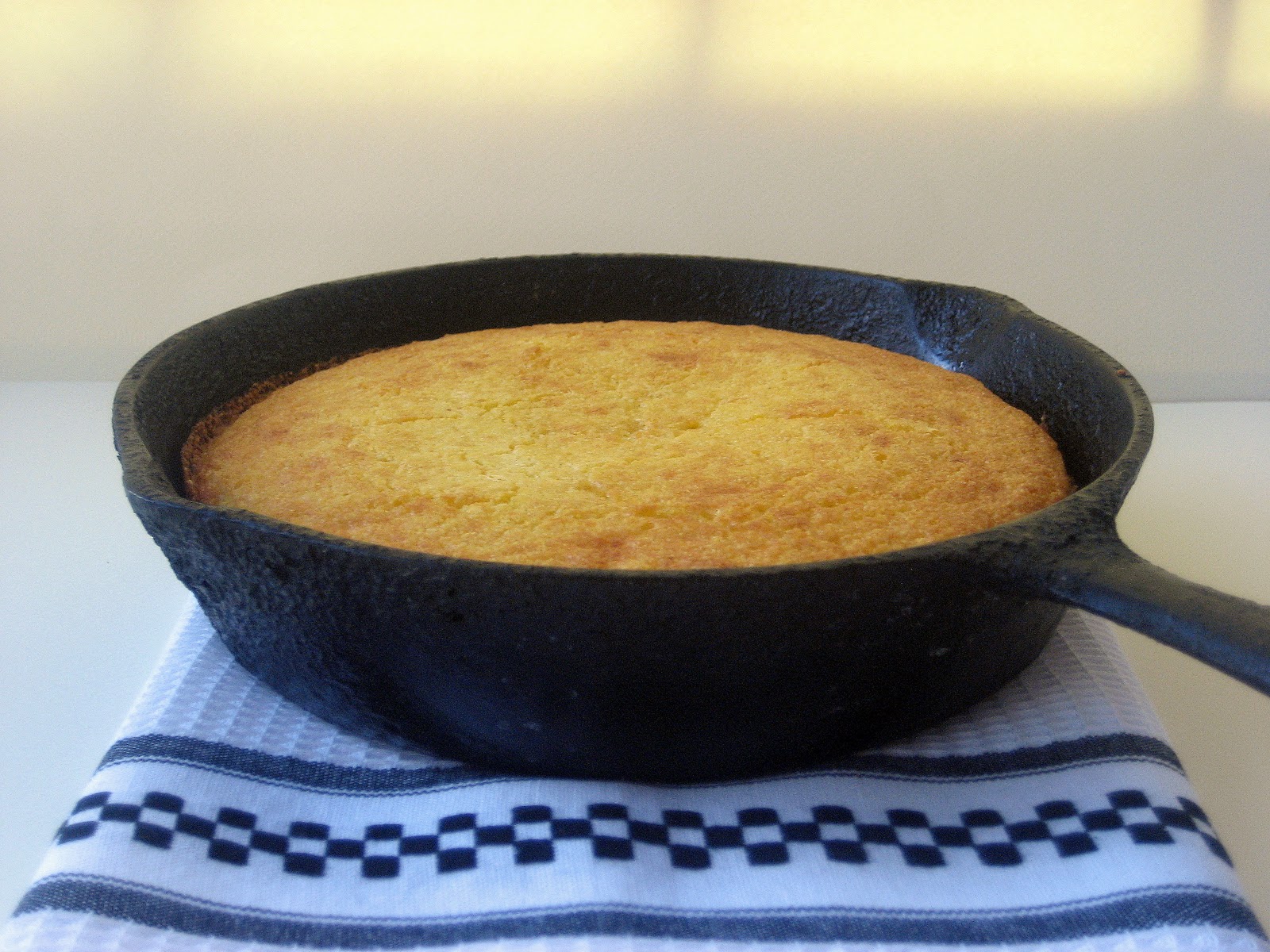
Since we couldn’t go out I decided to spend my time in the kitchen. I’ve made 6 pounds of chili (that was for a cooking class that had to be postponed), baked a white and dark chocolate cheesecake (a recipe testing for an upcoming Valentine course), prepared several batches of dark caramel sauce, and also turned out loaves of cheese-scented cornbread. Oh, and did I mention that I made a big skillet of red beans and rice another day. We might be cold, but we are certainly not hungry. 
Now I hear more snow is predicted in a few days so I’m planning to shop, stock up, and start cooking again.
 Cheddar Cornbread
You can use a sharp cheddar or a Monterey Pepper Jack cheese in this recipe. The former will add a mild cheese flavor while the latter will add a touch of heat. This cornbread is great with chili or vegetable soups.
4 teaspoons vegetable oil
2 large eggs
3/4 cup buttermilk
3/4 teaspoon baking powder
1/2 teaspoon salt
1/4 teaspoon baking soda
1 cup yellow cornmeal
1 cup (about 3 ounces) grated white cheddar or Pepper Jack cheese   
           
Arrange an oven rack at center position and preheat the oven to 450 degrees F.
Place oil in an 8-inch cast iron skillet set over high heat. Heat until oil is hot, 2 to 3 minutes. Watch carefully.
Whisk eggs and buttermilk together in a large mixing bowl. Whisk in baking powder, salt, baking soda, cornmeal, and cheese.  Pour oil into batter and mix well. Pour the batter into the skillet and place in the oven.
 Bake until a tester inserted into the center comes out clean, 15 to 20 minutes.  Remove and turn out bread onto a rack to cool for a few minutes. (Cornbread can be prepared a day ahead; wrap tightly and let stand at cool room temperature. Reheat in the microwave for several seconds.) Makes one 8-inch loaf.

Oh What a Cake!

Our friend Tina moved to Paris in the 1990s to pursue her journalism career, married a handsome Frenchman a few years later, and now has two adorable children. Along the way, she became a first-rate cook. At a recent dinner, she offered guests a first course of thick slices of the family foie gras (prepared annually by her French mother-in-law) accompanied by pear chutney and baguette slices. Next, the hostess arrived at the table with sautéed duck breasts napped in a rich red wine sauce, surrounded by tender haricots verts and golden potatoes. Salad and cheeses followed, but dessert was the evening’s pièce de résistance.
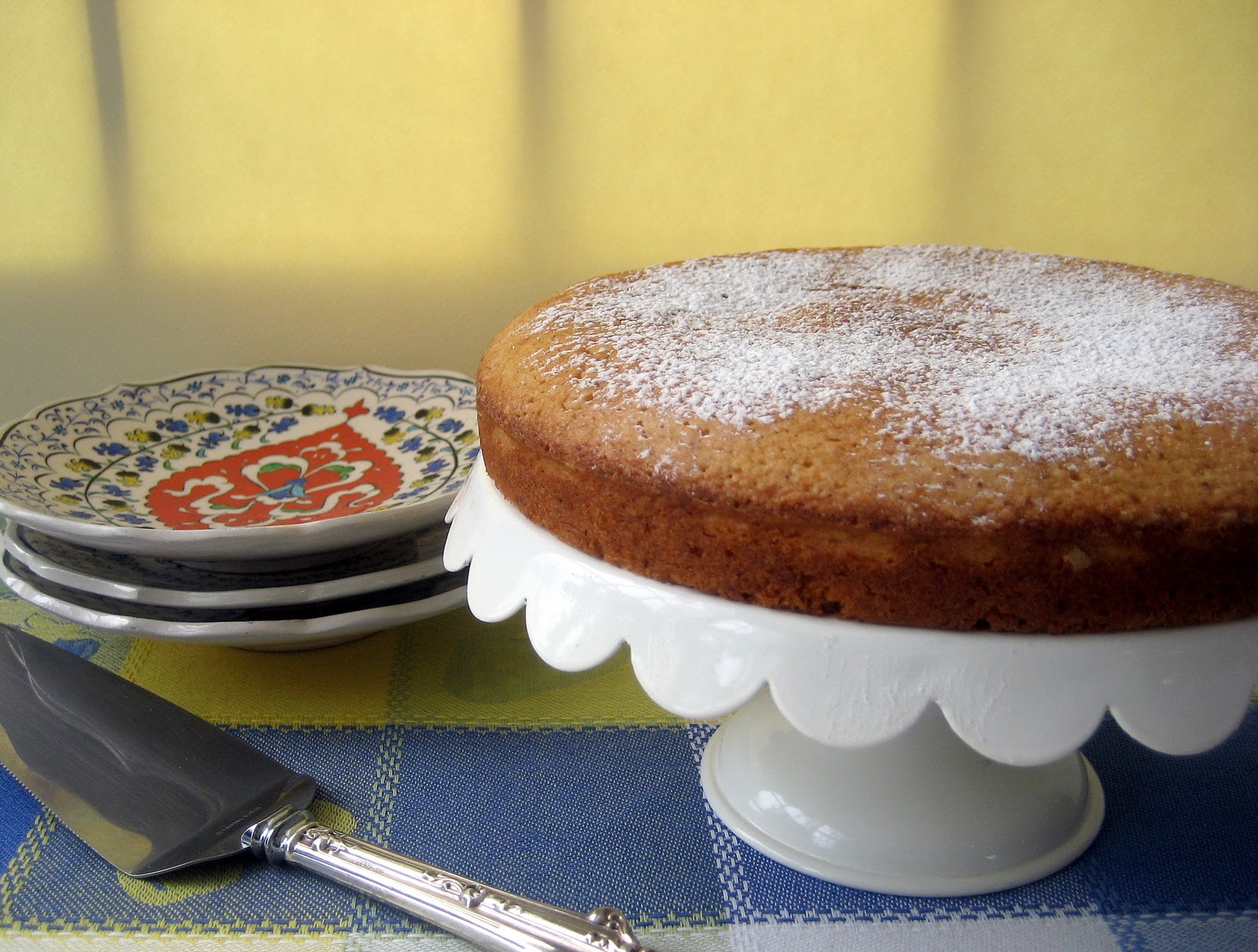
The talented cook served a financier cake. The French adore financiers, those mouthwatering little cakes made with brown butter, sugar, flour, and almonds. These confections are said to have originated in Paris’ financial district, and take their name from the brokers (financiers) who bought them. Tina’s version of this classic was distinctive because it was baked in a single pan rather than in small traditional molds. As everyone swooned over the warm buttery gâteau, she explained that the dessert was so easy to assemble that her 3-year old had helped mix the batter.
When I asked for the recipe, I learned that Tina had gotten it from another American expat in Paris, who had in turn learned how to prepare this confection from a French friend. Tina, having become a true French cook, couldn’t share the recipe without offering some variations. Use the cake as a base, she suggested, and add lemon, chocolate, or green tea (an ingredient the French employ imaginatively) for new flavors. For now, I plan to stick with the delicious Parisian original!
Tina’s Financier Cake
10 tablespoons (1 stick plus 2 tablespoons) unsalted butter at room temperature
            plus extra for the pan (See note.)
1 cup sliced or slivered almonds
1 cup sugar
2/3 cup flour
1/4 teaspoon fleur de sel or regular salt
4 large egg whites at room temperature, lightly beaten
11/4 teaspoons vanilla
Confectioner’s sugar, optional
Arrange a rack at center position and preheat the oven to 450 degrees F.  Butter and flour an 8-inch cake pan. Line the bottom with a piece of parchment cut to fit the pan.  Butter and flour the paper.
Place the butter in a small, heavy saucepan set over medium heat. Whisk often until butter has melted and comes to a boil.  Cook at a gentle boil until butter turns a rich nutty brown, about 4 minutes. Watch carefully as the butter can go from brown to dark quickly. Remove from the heat and set aside.
Process the almonds in a food processor, pulsing the machine, until they are finely ground. Transfer to a large mixing bowl and add the sugar, flour, and fleur de sel. Whisk to combine. Whisk in the egg whites and the vanilla. Gradually whisk in the butter until well incorporated. Pour the batter into the prepared pan.
Bake the cake until golden, and a tester comes out clean when inserted into the center, about 20 minutes. Remove from the oven, cool 5 minutes, and then unmold. Serve, either warm or at room temperature. Dust lightly with confectioner’s sugar if desired.  Serves 6.
Note: In Tina’s recipe the butter is softened to room temperature and simply whisked into the dry ingredients along with the egg whites and vanilla. However, the butter for financiers is typically melted and cooked until it becomes golden brown or what the French call beurre noisette. I followed this classic technique as it deepens the flavor of the cake.