Roast turkey with herb butter and shallot pan gravy served with Southern cornbread dressing–those are the two mainstays of our family’s Thanksgiving menu. If I changed either of them, no one would come to the table! (Several years ago I offered up a fine cider- basted turkey along with cornbread dressing studded with root vegetables, and faced a near rebellion from my clan.) On the other hand, our group of hearty eaters is open to trying new trimmings be they appetizers, side dishes, or desserts.
So, this year, I thought I’d share with readers some of my favorite dishes that have accompanied our steadfast bird and dressing over the years. Happy Thanksgiving from my table to yours!
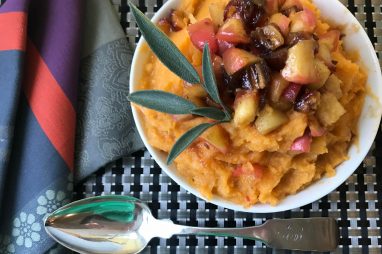
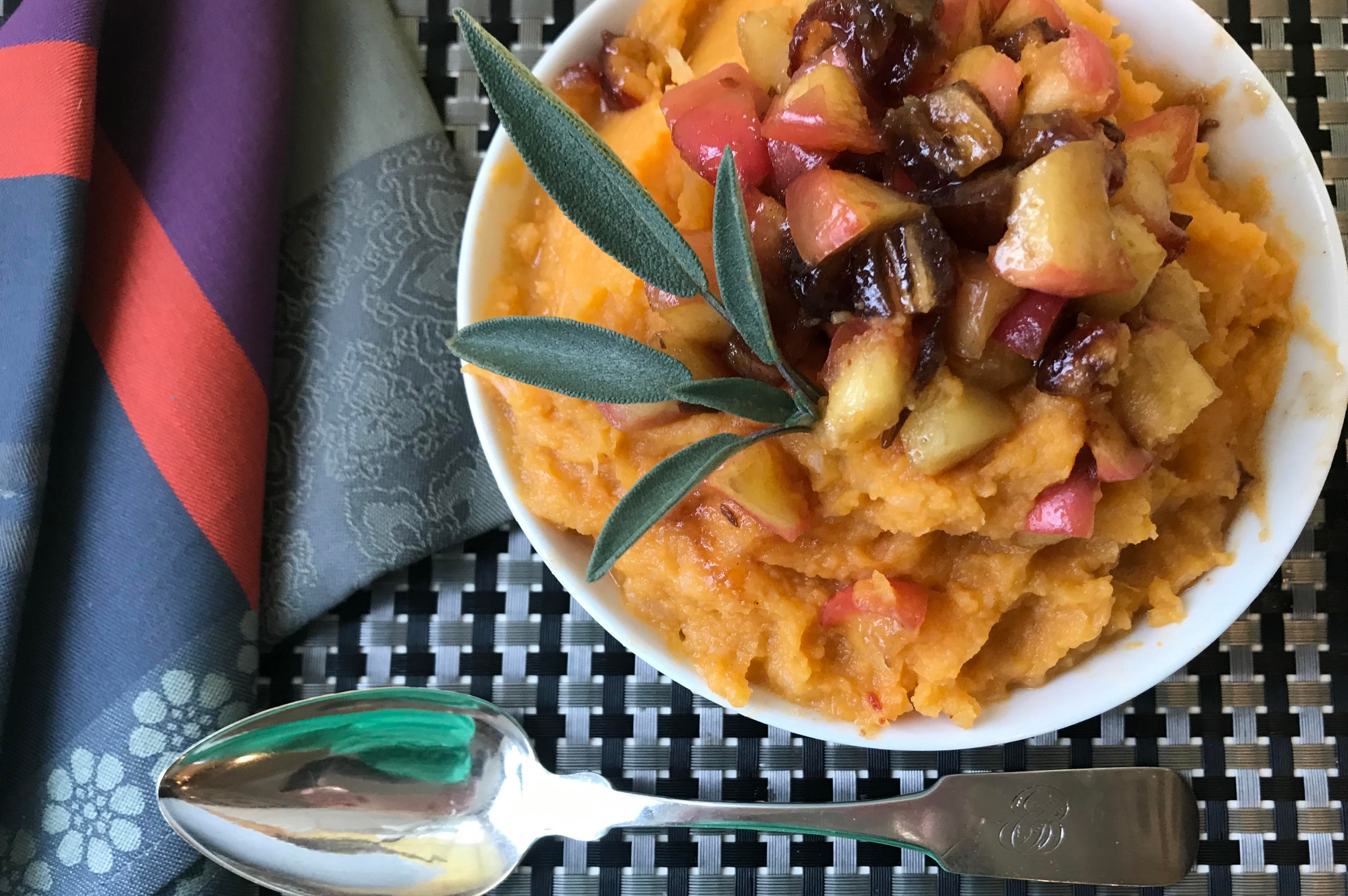
Mashed Sweet Potatoes and Turnips with Apple Date Relish
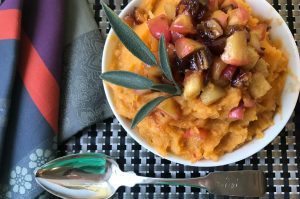 For a colorful vegetable side, consider these root vegetables which are blanched, smashed, then, seasoned with butter. A sauté of diced apples and dates in brown sugar makes a beautiful garnish. I first made this dish for a magazine Thanksgiving story twenty years ago, but for the new version, I added extra butter to the vegetables and increased the scrumptious sautéed apple date relish. The recipe follows here on this page.
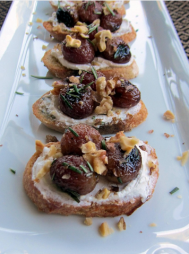
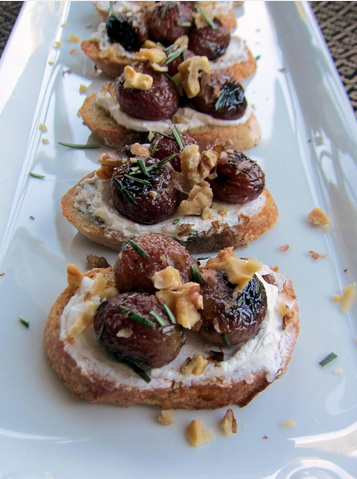
Roasted Grape, Goat Cheese, and Walnut Toasts
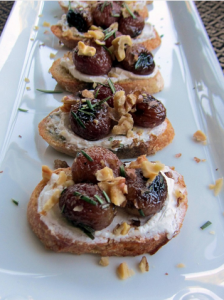 For appetizers, this seasonal starter is simple to assemble and can be prepared several hours in advance. It’s also easy to transport if you’re a guest contributing to a Thanksgiving dinner. Just click on the recipe title for the recipe.
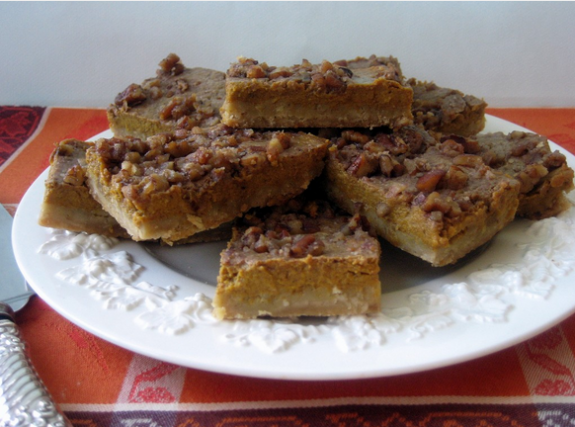
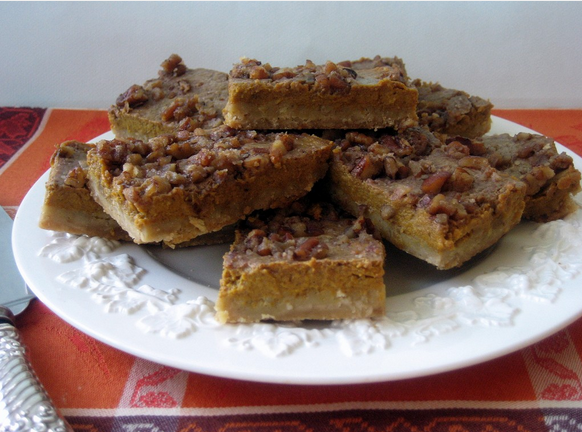
Wendy’s Thanksgiving Pumpkin Pie Bars
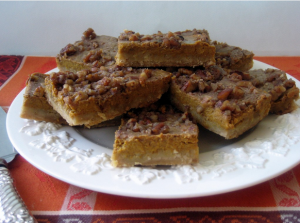 For dessert try these bars, a delectable departure from traditional pumpkin pie. They are prepared with a buttery crust that is pressed into a baking pan, then baked until golden. A creamy, spiced pumpkin mixture is added next, followed by a sprinkle of pecan toffee streusel. Cut into squares and served with dollops of whipped cream, these bars could definitely rival a classic pumpkin pie. Just click on the recipe title for the recipe


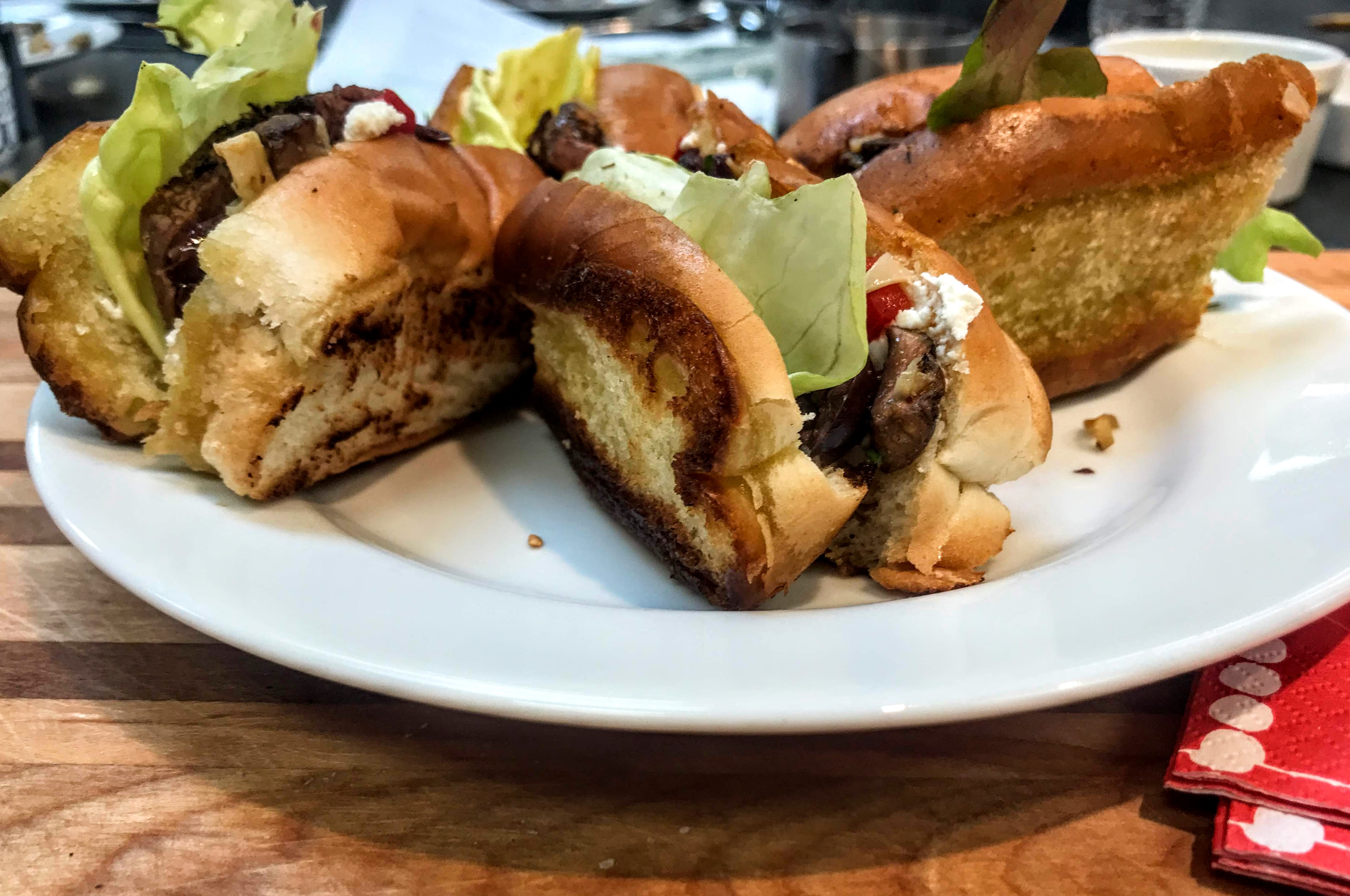 At a holiday cooking class this week, the most popular dish I prepared was sliders filled with extra thin slices of beef tenderloin, then mounded with homemade artichoke, red pepper, and olive relish.